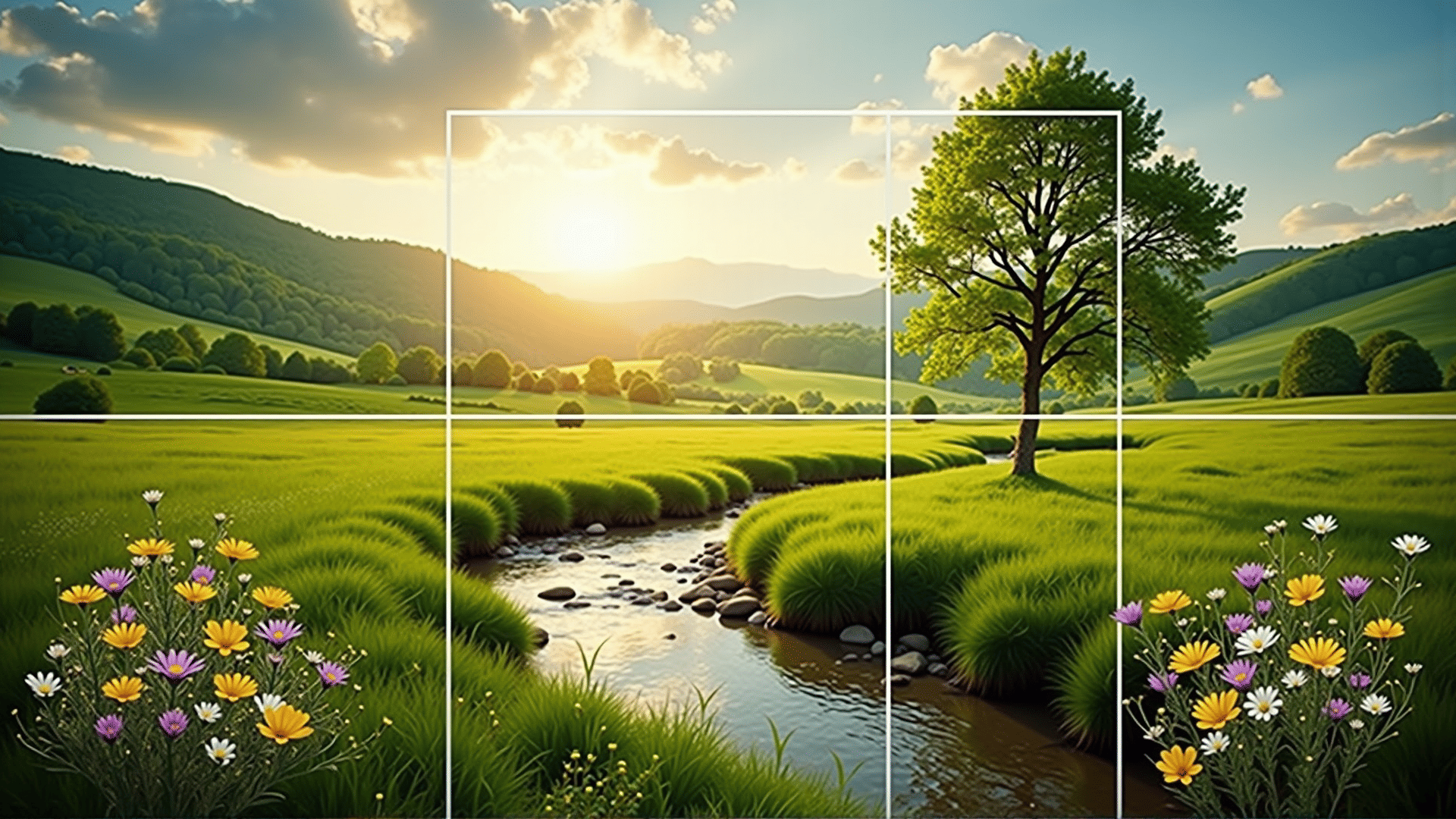
In the world of photography, composing an image is as crucial as the technical aspects of capturing it. The rule of thirds is one of the most fundamental principles that every photographer should understand and apply to elevate their imagery. This simple yet powerful guideline helps create balanced and compelling compositions that draw the viewer's attention naturally to the focal points in an image.
The rule of thirds involves dividing an image into a 3x3 grid, resulting in nine equal parts. By aligning the subject or key elements with these lines or their intersections, a photographer can enhance the image's balance and dynamic quality. This technique derives its effectiveness from the way the human eye naturally gravitates towards these points, rather than the center of an image.
One of the great benefits of using the rule of thirds is how it introduces asymmetry, which can lead to more interesting and appealing compositions. For example, placing the horizon along the bottom third of a frame allows more room for a dramatic sky, adding depth and grandeur to landscape shots. Conversely, positioning the horizon along the top third can emphasize the foreground, bringing focus to detailed textures and patterns.
Portrait photography is another area where the rule of thirds can shine. By positioning a subject's eyes, which are usually the focal point, at one of the upper intersections of the grid, photographers can create portraits that feel more natural and engaging. This approach also provides more space in the frame for the subject to look into, giving the image a sense of direction and flow.
It's important to remember that the rule of thirds is a guideline, not an absolute rule. There are instances where breaking it can lead to striking compositions. For instance, placing a subject dead center can create a powerful, static effect that draws immediate attention when used appropriately. Understanding when and how to apply these exceptions can come with practice and experience.
Incorporating the rule of thirds into your photography doesn't require sophisticated tools or equipment. Most cameras and smartphones now have an option to overlay the grid, making it easier to envision how your composition will align with each segment. With time, you may find yourself instinctively framing images according to this principle, enhancing the visual impact of your work.
Ultimately, the rule of thirds is not about rigidly adhering to a formula but about unlocking creative potential. By learning to see the world through this lens, photographers can refine their ability to capture moments that are not only balanced but also emotionally resonant and visually stimulating. Whether you’re photographing landscapes, portraits, or street scenes, this timeless principle will guide you in crafting photographs that resonate with your artistic vision.